

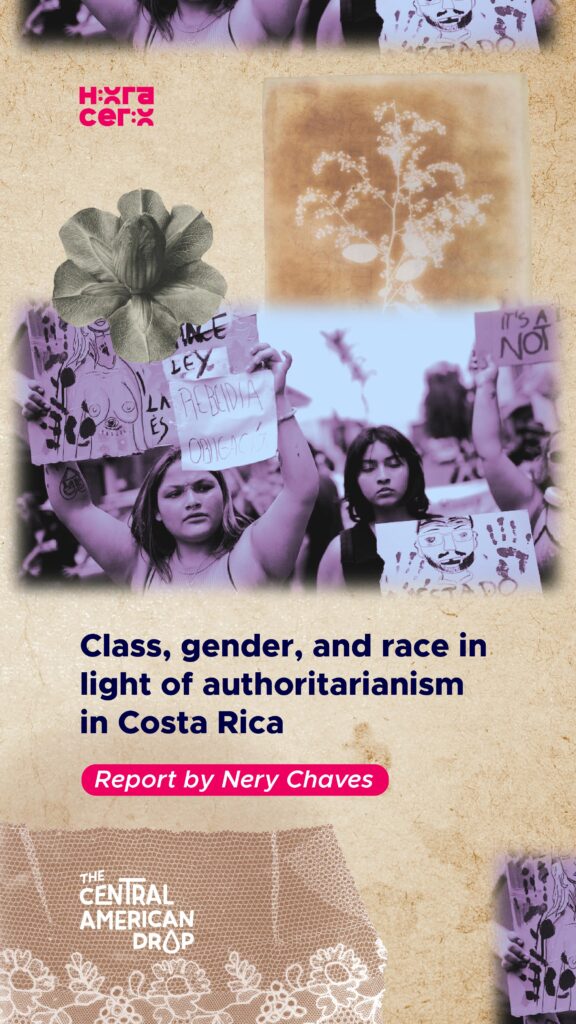
Every March 8th, International Working Women’s Day, has woven together fundamental reflections on the material and symbolic conditions of women’s lives. More recently, since 2017, women, feminist, and allied organizations have coalesced under the banner of the “international strike” as a form of protest and demonstration of the crucial role women play in sustaining life and maintaining the world’s material conditions. Beyond the photographs and massive marches, this year has also involved processes of self-criticism parallel to the analysis of the current situation, since resistance does not occur in a vacuum and is not limited to an annual commemorative date.
This year is no exception; critical thinking about the current situation is fundamental, necessary, and urgent when considering the neoliberal, conservative, anti-rights, repressive, militarized, deeply misogynistic, and anti-trans context. It is also necessary to address the divisions within women’s and feminist organizations, given that trans-exclusionary «feminist» sectors are also responsible for the rise of the conservative and anti-rights wave. Costa Rica is no exception to this context. Therefore, in this text, I intend to explore the political context surrounding the March 8th mobilizations, the administration of Rodrigo Chaves, and the perspectives of women organized both within and outside the country.
Marks on the body: consequences of Rodrigo Chaves’ administration on children, women, and the LGBTQ+ community
There is no doubt that Rodrigo Chaves’s presidency has had profound consequences on the lives of women, girls, and the LGBTQ+ community. His misogynistic rhetoric, which cynically mocks political identities and openly disparages feminist and women’s (trans and cis) organizations, has been the norm during his administration. This rhetoric has materialized in neglect and a lack of understanding of public policies that, in turn, weaken the National Institute for Women (INAMU). An institute which is now largely overwhelmed by the femicide crisis, which is on the rise: every 14 days, 2 women (cis) are murdered in Costa Rica. This is compounded by the deepening precarity of women’s lives (trans and cis), as, according to the National University and the National Institute of Statistics and Census (INEC) (UNA), women earn less than men and are more affected by unemployment (Women represent 8.6% while men represent 6.7%).
The effects range from the elimination of the Comprehensive Sexuality and Affectivity programs for allegedly containing “erotic and perverse” material to the elimination of the Technical Standard for Therapeutic Abortion. The latter was used as a bargaining chip for the electoral support of the Evangelical Alliance, and the government reaffirmed their «absolute commitment to life«, using the same rhetoric as neo-Pentecostal and ultra-conservative sectors. At the same time, the Costa Rican Social Security Fund (CCSS) issued a warning that in Puntarenas, teenage pregnancies and sexually transmitted infections (STIs) have increased. To this, we must add the deepening of the precariousness of living conditions during the current government. With the rising cost of living, the weakening of social policies focused on vulnerable sectors, and the dismantling of public institutions (social security, public schools, school cafeterias, etc.).
Such setbacks are not unusual; history demonstrates that the advance of conservative, neoliberal, and authoritarian sectors has led to a decline in the material and political conditions of women, people with the capacity to gestate, and therefore the breadth of the LGBTQ+ community, as well as children. A recent example is Honduras, after the coup against Manuel Zelaya in 2009, amidst the resistance, the government passed a decree prohibiting the sale and circulation of emergency contraceptive medications because they considered them «abortifacients». As if that weren’t enough, this decree directly interfered with the establishment and activation of health protocols for sexual violence and the prevention of unwanted pregnancies. It wasn’t until 2023 that the president, Xiomara Castro, reversed that decree, which remains threatened by the upcoming Asfura government. Another, much more recent example takes us to Nicaragua in 2006, particularly Daniel Ortega’s alliance with the Catholic Church set to reverse one of the victories of the Nicaraguan Women’s Movement: the decriminalization of therapeutic abortion.
For Daniela Núñez García, director of the Trans Memory Archive in Central America, the impacts are differentiated territorially and racially. “It is not the same for a woman in San José, Cartago, or Alajuela as for a woman from Guanacaste or Limón.” These last ones are provinces that are built and constituted with populations of Afro-descendant ancestry. In Puntarenas, women have been “bordered,” in Daniela’s words. From her perspective, neoliberal and colonial policies are “even more lethal in rural areas.” This territorial condition permeates the political and social spheres, in which women are affected by various forms of violence and structural inequalities. Among these, Daniela draws attention to the weak or nonexistent access to healthcare for women in rural areas, as well as the silence during the election campaign regarding public policies to address the droughts that are increasingly affecting the province of Guanacaste. In that sense, Daniela emphasizes the importance of visualizing violence in terms of race, rurality, and, in general, a world that goes beyond the Central Valley of Costa Rica. It is precisely in the coastal and border provinces where conservative political avenues have been electorally fueled, which is closely related to historical and structural policies of exclusion, racism, hunger, and contempt for these communities.
From a national and regional perspective, Daniela identifies Costa Rica as part of that global wave a shift to the right and, particularly, one of “dehumanization». This process becomes evident when considering the ongoing genocides in South Sudan and the Republic of Congo. and Palestine, the invasion of Venezuela, and the kidnapping of Nicolás Maduro. Costa Rica reflects this global process when, as Daniela points out, “the government insists on the installation of open-pit mining in the country, establishes business and diplomatic relations with the genocidal state of Israel, and also maintains its subservience to the imperial and colonial policies of the United States.” These are all aspects that were already occurring in Costa Rica, but which the Cháves government took to extremes, and “shamelessly,” Daniela remarks.
Carolina Marín, an animal rights activist, anti-speciesist feminist, founder of Rinconcito Animal (an animal sanctuary in Costa Rica), and member of Casa Animal, describes Costa Rica as “passive and conservative,” fraught with uncertainty and widespread fear among political dissidents, women, children, and the LGBTQ+ community. The normalization of violence and political repression is one of Carolina’s biggest concerns, given its potential to further damage the social fabric already weakened by the neoliberal policies imposed over the past three decades.
Carolina also does not doubt that the Chaves Robles government has directly affected women, children, and the LGBTQ+ community by normalizing violence against them, amplifying it, and sending a message to its followers that this kind of hate speech is normal; this is in addition to the mockery and constant disrespect shown to political dissidents. Carolina also draws attention to two particular setbacks: on the one hand, the few gains achieved are at imminent risk—such as therapeutic abortion—and on the other, there has been a regression in the processes of dialogue and visibility regarding human rights that were promoting inclusive political agendas for women, the LGBTQ+ community, and other vulnerable sectors in their broad diversity. In other words, for Carolina Marín, the regression goes beyond what has been achieved through legislation and is related to a cultural issue of closeness and dialogue with others. In the sense that Chaves has exacerbated polarization and, particularly, hatred of difference.
Resistance strategies: “humanize everything.”
Faced with this widespread shift to the right and dehumanization, both activists agree that one of the keys to resistance is building community, networks, and alliances among peers, but even more importantly, with those we consider different. “In the words of Susy Shock,” Daniela says, we need “to humanize everything.” It’s about “talking to the neighbor, the person next door, the ordinary person, the one who isn’t Milei, isn’t Bukele, isn’t Kast, isn’t Chaves.”, to humanize it and in particular, to humanize ourselves, those of us who have been deprived of humanity» It is about, continues Daniela, from “politicizing the political history of these also political subjects that led them to vote for the continuation of change.” That is, politicizing the history of those who voted for Chávez’s successor, Laura Fernández of Pueblo Soberano (PPSO). Faced with polarization, the solution is to foster encounter, territorial dialogue, and meaningful engagement, placing our shared humanity at the center.
Daniela indicates that beyond reactions or reactive responses, we should seek to build bridges that allow for encounters, face-to-face dialogue, and for this, it is essential to decentralize political actions outside the Central Valley. This must be done without losing sight of the violence inherent in center-periphery relations, so as not to fall into savior-like, extractive, or didactic dynamics. For this, Daniela points out that it is fundamental for Central Valley feminisms to «question their political position» and “take responsibility for the place of abandonment to which they have historically condemned the Afro-descendant/racialized and border provinces of Costa Rica.”
Daniela and Carolina agree that there is a rhetoric that suggests all is lost, that blurs hope or the possibility of a future. In response, Carolina proposes the need to resist also through joy, and to foster collective creativity and connection, strengthening spaces for expansion and community building. Daniela, for her part, points out that the route is collective, communal, without so much punitivism, that the route is black, Afro-descendant, maroon, mulatto, like when our ancestors imagined a future.
| Cookie | Duración | Descripción |
|---|---|---|
| cookielawinfo-checkbox-analytics | 11 months | This cookie is set by GDPR Cookie Consent plugin. The cookie is used to store the user consent for the cookies in the category "Analytics". |
| cookielawinfo-checkbox-functional | 11 months | The cookie is set by GDPR cookie consent to record the user consent for the cookies in the category "Functional". |
| cookielawinfo-checkbox-necessary | 11 months | This cookie is set by GDPR Cookie Consent plugin. The cookies is used to store the user consent for the cookies in the category "Necessary". |
| cookielawinfo-checkbox-others | 11 months | This cookie is set by GDPR Cookie Consent plugin. The cookie is used to store the user consent for the cookies in the category "Other. |
| cookielawinfo-checkbox-performance | 11 months | This cookie is set by GDPR Cookie Consent plugin. The cookie is used to store the user consent for the cookies in the category "Performance". |
| viewed_cookie_policy | 11 months | The cookie is set by the GDPR Cookie Consent plugin and is used to store whether or not user has consented to the use of cookies. It does not store any personal data. |