

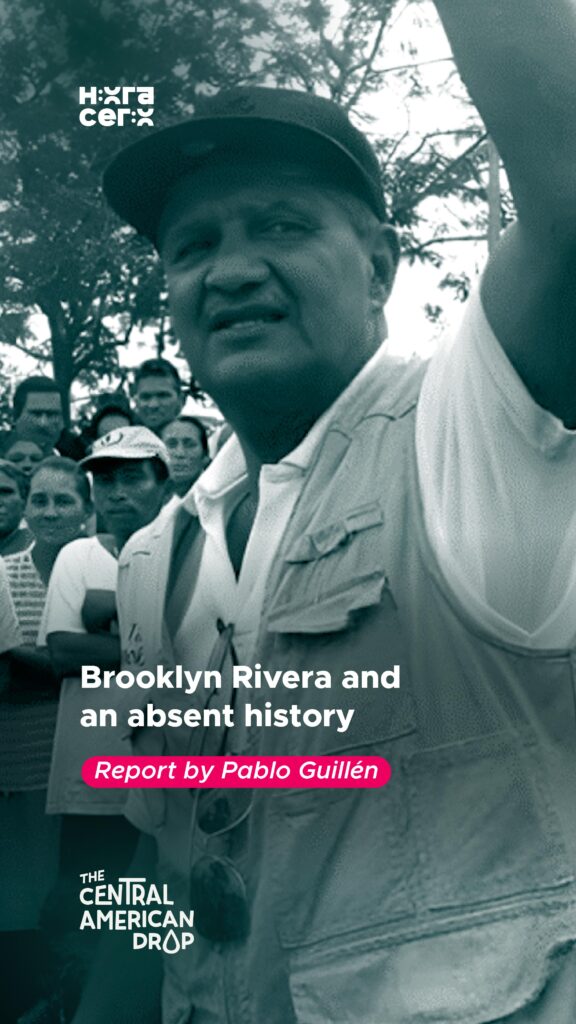
Brooklyn Rivera’s photographs compel one to pause. For years, his name circulated amidst rumors, accusations, statements, and silences. Now he reappears in a hospital bed. The contrast is stark. It’s difficult to recognize in that frail body the Taupla who for decades traveled through communities in La Moskitia, participated in assemblies, debated autonomy, and became one of the best-known political figures on the Caribbean Coast.
His reappearance comes after more than two years of detention and long periods of enforced disappearance, as denounced by international organizations. Before any political debate, the images confront the country with a human reality that cannot be ignored.
The photographs circulated throughout Nicaragua and quickly spread beyond its borders. Governments, international organizations, human rights organizations, and the media reacted with concern. Within the country, something more complex unfolded. Alongside expressions of solidarity, old political disputes resurfaced. Some demanded explanations. Others sought to justify what had happened. And some celebrated the physical decline of a seventy-three-year-old man.
As I watched that conversation, one impression became increasingly clear. Many people seem to have strong opinions about Brooklyn Rivera. Far fewer seem interested in the process that explains why his name became a political touchstone for broad sectors of the Caribbean Coast. And perhaps that difference explains why the discussion about his reappearance ended up revealing more about Nicaragua than about Brooklyn Rivera himself.
Brooklyn Rivera did not emerge from a political vacuum. His journey is intertwined with some of the most significant processes in contemporary Nicaragua. Behind his name lie the displacements that marked thousands of families during the 1980s, the tensions between the state and the Indigenous communities of the Caribbean Coast, and the debates that culminated in regional autonomy. Also present are organizations such as MISURASATA, MISURA, KISAN, and later YATAMA, whose names continue to hold a central place in the collective memory of La Moskitia.
Nicaragua has constructed much of its political memory looking toward Managua. National crises are often interpreted from that perspective, key figures are identified, and the episodes deemed worthy of remembrance are defined. The result has been a national narrative that has made the Caribbean Coast the stage for decisive events, but rarely the protagonist of the national story. This is not merely a geographical omission. It is also a way of understanding the country where some experiences occupy the center of the national narrative while others remain on the margins, even when they transformed fundamental discussions about citizenship, territory, political participation, and collective rights.
The conversation often loses its grip when names like Awas Tingni, YATAMA, or “Red Christmas” come up. Suddenly, these events seem to have happened somewhere else, as if a significant part of the country has been left out of the national narrative. Not because they were less important, but because the country’s political memory has tended to relegate them to the margins, even though they transformed fundamental debates about citizenship, territory, and collective rights.
Awas Tingni emerged from a small Indigenous community on the Caribbean Coast and ended up securing a place in international jurisprudence on Indigenous rights. The Yatama ruling followed a similar path. What began as a dispute related to the political participation of Indigenous peoples ended up becoming a continental reference point. Both processes originated on the Caribbean Coast and ended up influencing debates that transcended national borders. Even so, many people are familiar with the controversies surrounding Brooklyn Rivera without pausing to consider the processes that led him to occupy that position.
Autonomy is often explained through regional councils, administrative powers, and legal frameworks. However, its most profound impact was political and social. It allowed for the development of independent leadership, forms of organization, and spaces for representation whose legitimacy arose in Indigenous and Afro-descendant communities rather than in traditional centers of power. This is one of the keys to understanding why certain figures end up becoming symbols of debates far broader than their own biographies.
That’s why the images of Brooklyn Rivera evoke more than just concern for his health. In La Mosquitia, many people see not only a sick political leader. They see the displacements along the Coco River, entire communities forced to abandon their homes, and Monsignor Schlaefer walking alongside refugee families. They see the struggles for autonomy, the efforts of Indigenous and Afro-descendant communities to defend their territories, institutions, and forms of organization. They see a conversation that never truly ended, and that resurfaces time and again in different forms.
Inside and outside Nicaragua, reactions seemed to follow different paths. Outside the country, attention focused on enforced disappearances, arbitrary imprisonment, and state responsibility for individuals in its custody. Inside Nicaragua, the debate quickly returned to political sympathies, past alliances, and unresolved issues. Both conversations coexisted for days, though they didn’t appear to be about the same thing.
The photographs of Brooklyn Rivera will likely disappear from the news cycle in a few weeks. Other stories will take their place, and new controversies will claim public attention. What will remain, however, is a more difficult question to answer: how is it possible that a country has such strong opinions about one of the most well-known leaders on the Caribbean Coast and knows so little about the path that led him to that position?
The real challenge may not be simply deciding what we think about Brooklyn Rivera. Rather, it lies in recognizing that an essential part of the country continues to be viewed as an afterthought. Because behind his name lies not only the trajectory of an Indigenous leader, but also a collective experience that Nicaragua still refuses to confront directly.
| Cookie | Duración | Descripción |
|---|---|---|
| cookielawinfo-checkbox-analytics | 11 months | This cookie is set by GDPR Cookie Consent plugin. The cookie is used to store the user consent for the cookies in the category "Analytics". |
| cookielawinfo-checkbox-functional | 11 months | The cookie is set by GDPR cookie consent to record the user consent for the cookies in the category "Functional". |
| cookielawinfo-checkbox-necessary | 11 months | This cookie is set by GDPR Cookie Consent plugin. The cookies is used to store the user consent for the cookies in the category "Necessary". |
| cookielawinfo-checkbox-others | 11 months | This cookie is set by GDPR Cookie Consent plugin. The cookie is used to store the user consent for the cookies in the category "Other. |
| cookielawinfo-checkbox-performance | 11 months | This cookie is set by GDPR Cookie Consent plugin. The cookie is used to store the user consent for the cookies in the category "Performance". |
| viewed_cookie_policy | 11 months | The cookie is set by the GDPR Cookie Consent plugin and is used to store whether or not user has consented to the use of cookies. It does not store any personal data. |