


Unprecedented cold front in Central America
Maldito País
febrero 25, 2026
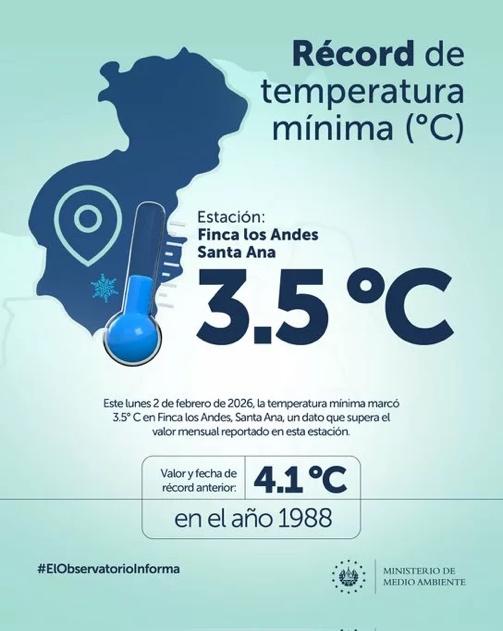
The drastic temperature drops in the region have been evident, breaking records and affecting all countries. Guatemala recorded lows as low as -3°C, while El Salvador broke its record low temperature, reaching 3.5°C, and Honduras reached 9°C, a considerable decrease compared to the temperatures in 2023.
However, this wave originating from the Arctic Circle is no coincidence; it speaks to how these processes have intensified due to global warming, which is altering natural atmospheric patterns. Experts are predicting a year of extreme weather in the region and the world.
Engineer and environmentalist Ricardo Navarro, president of the Center for Appropriate Technology (CESTA), told HoraCero that the increase in energy in the atmosphere is causing extreme undulations in the polar current, allowing masses of cold air to descend to Central America.
The expert explains that when the sun heats the Earth, it does so most intensely at the equator. This heat causes the air to expand and rise. Meanwhile, cooler air from the north descends to fill the space left by the rising warm air. However, due to the Earth’s rotation, as the air approaches the equator, it doesn’t descend in a straight line, but rather moves in waves and more slowly, generating currents that flow from east to west.
“According to Newton’s Law, the product of speed and radius must remain constant; that is, if the radius increases, the air speed decreases. We interpret this as winds coming from the east. Then, the air that heats up and rises reaches the tropopause, where the troposphere ends, cools down, and drops about 30 degrees, forming a cycle, a cell that has been called the Hadley Cell.”
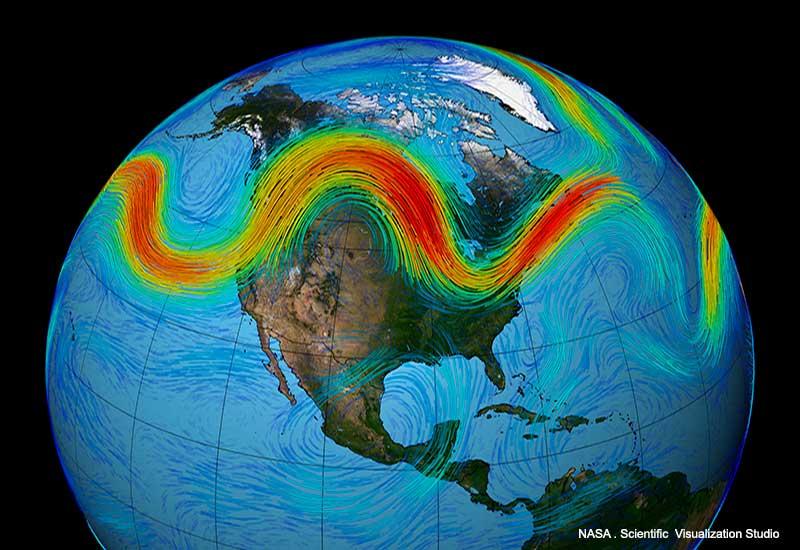
Navarro describes two strong air currents that circle the planet in the opposite direction to the winds below. One is located at 30° north latitude and the other at 60°, far to the north. This latter one is called the jet stream or polar vortex, which travels at speeds between 300 and 400 km/h and circles the Earth completely.
This looks something like this:
The expert’s statement seems contradictory. While we experience intense cold in tropical regions, the Arctic is dying due to global warming. Its sea ice is disappearing at an accelerated rate, and in a few years, he asserts, we will no longer observe these glacial climates.
However, regarding the influence of climate change on the weakening of the polar vortex, the vice president for science of Climate Central, Kristina Dahl’s opinion is not conclusive. She states that it is still a topic under investigation. «Science has not yet reached a definitive conclusion on this, and it is important to remember that cold waves like this are short-term meteorological phenomena, while the long-term trend is toward warmer summers and winters across almost the entire planet,» she told Journalists for the Planet.
Climate Central has determined that the temperatures experienced in Central America during the first week of February were exceptionally unusual due to climate change. This analysis is based on its Climate Change Index (CSI), which indicates how climate change has altered the frequency of daily temperatures anywhere in the world, every day. It is based on peer-reviewed attribution science and was launched by Climate Central in 2022.
“So, while we can’t say for sure that climate change is causing more outbreaks of polar vortices and a more wavy jet stream, we can say for sure that climate change is making these extremely cold temperatures less likely overall,” Dahl explained.
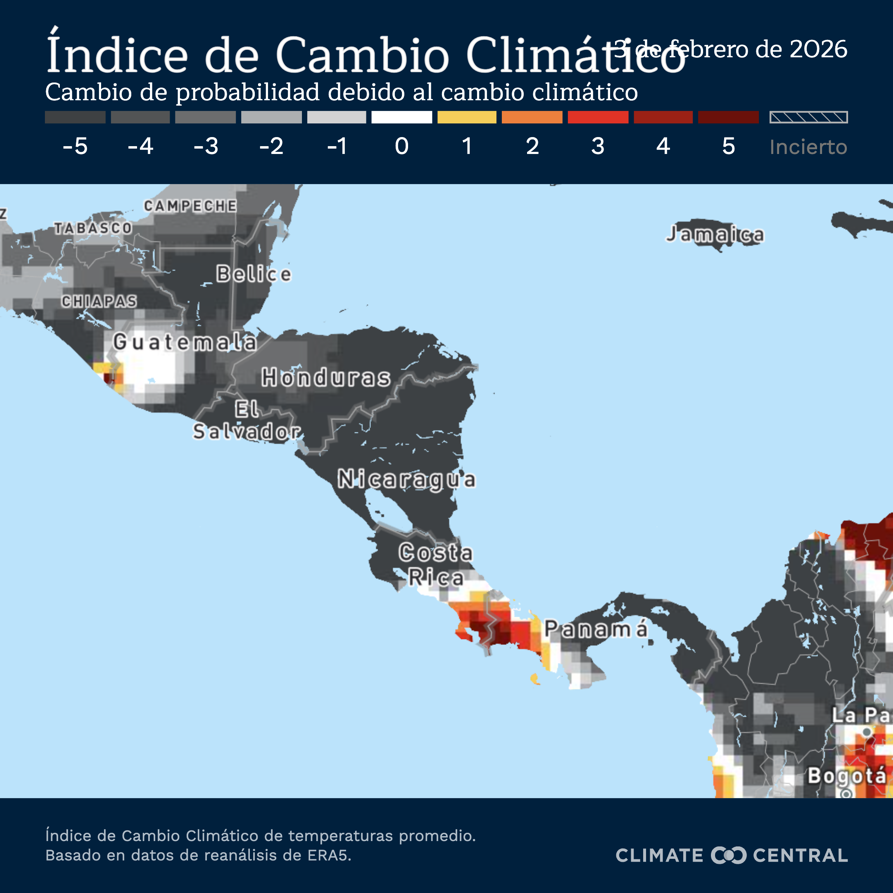
With this, science explains that cold waves, like those of the last few days, will become less and less likely and, when they do occur, they will be less cold, since they start from a warmer base.
The tally of the damage in Central America
El Salvador’s initial damage to this year’s crops is already being reported due to temperature fluctuations and wind gusts. The Salvadoran Chamber of Small and Medium Agricultural Producers (CAMPO) warned that the plants’ development cycle has been disrupted, and although the damage is currently considered minimal, the full extent of the damage will become apparent after the harvest, as these conditions reduce corn and bean production.
Likewise, members of the Agricultural, Rural, and Indigenous Roundtable pointed out potential problems with bean planting in the highlands of Ahuachapán due to the winds. For this same reason, coffee growers’ associations report grain falling and damage from gusts in areas above 1,200 meters.
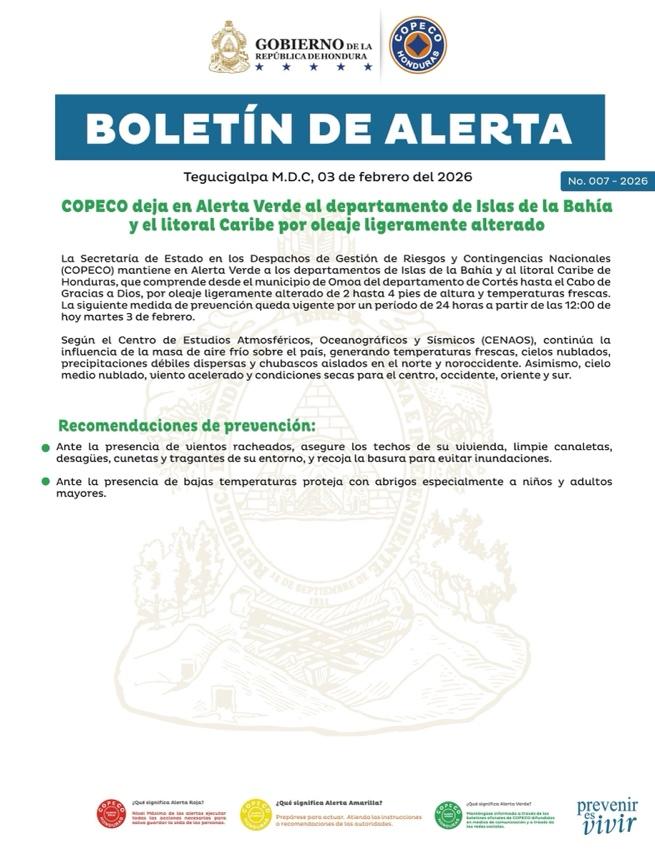
In Honduras, approximately 29 floods and unstable weather have been reported. The Permanent Contingency Commission (COPECO) reported evacuations, with approximately 149 people in shelters, and declared a green alert for five departments of the country due to the cold front.
For its part, Guatemala’s Ministry of Agriculture, Livestock and Food (MAGA) warned that strong winds, drought, and a sharp drop in temperatures increase risk factors for crops and livestock, and therefore established vulnerable zones in 17 departments and 181 municipalities.
Forecasts for the coming months warn of intense heat and extreme temperatures. This, along with the glacial cold we have experienced, are symptoms of an unbalanced climate in Central America, already vulnerable due to losses and damages from extreme natural phenomena, conditions of inequality, and the lack of attention given to environmental issues by governments. For years, environmentalists have urged investment in these territories, strengthening of agriculture, early monitoring, and emissions reductions, especially from the major powers. Ignoring this only accelerates the countdown to irreversible collapse.
