

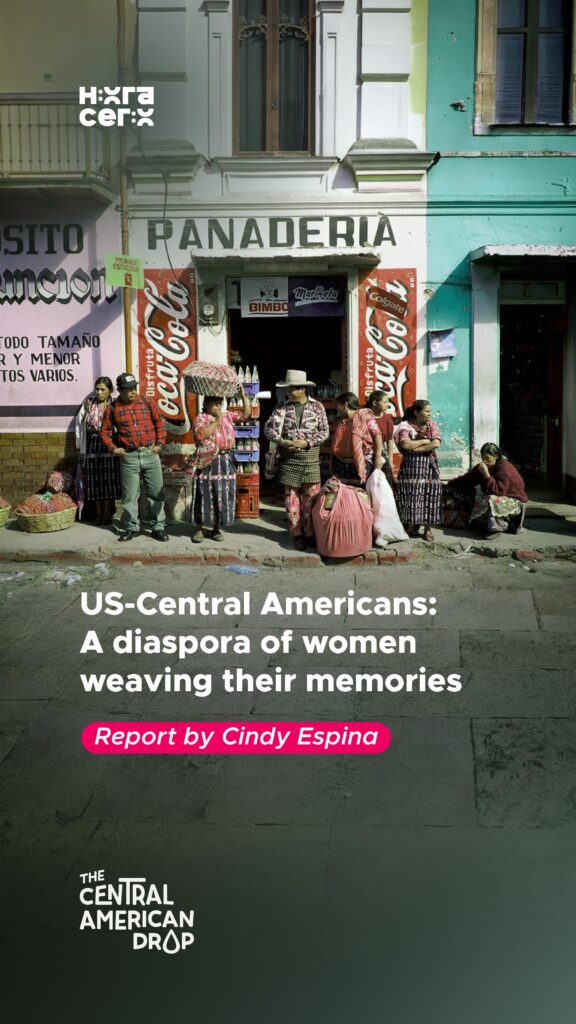
Two academics, born in El Salvador between the late 1960s and late 1970s and raised in Los Angeles during the 1980s, explore and weave together the threads of memory of women of Central American origin in the United States. They do this through an intergenerational dialogue, which is reflected in their recent collaborative book: Central American Women in Diaspora, Testimonios of the Generations
They are Ester E. Hernández and Alma Karina, two professors and researchers whose work has focused on creating a collective memory and making visible the history of Central Americans in the United States. Alma is an assistant professor in the Department of Chicano and Central American Studies at the University of California, Los Angeles. She is also a poet and painter, and she combined all her skills to create the book titled: Central American Counterpoetics, Diaspora and Rememory.
Ester is a professor of Anthropology at California State University. She is co-editor of the first anthology on the first and second generations of Central American women in the United States, titled: U.S. Central Americans: Reconstructing Memories, Struggles, and Communities of Resistance. She is also the Vice President of the Board of Directors of the Coalition for Humane Immigrant Rights of Los Angeles (CHIRLA).
“When we planned the book, we didn’t want an approach that simply positioned people as ‘victims’; we wanted to build communities and strengthen them,” explains Alma Karina, highlighting one of the objectives that guided the book’s coordination. Central American Women in Diaspora: Testimonies of Generations is a book featuring essays by 35 women from different generations with Central American roots.
For her part, Ester points out that another objective was «to start a conversation about memory and amplify ethnicity, the differences of our ethnicity and the geopolitics of the region.»
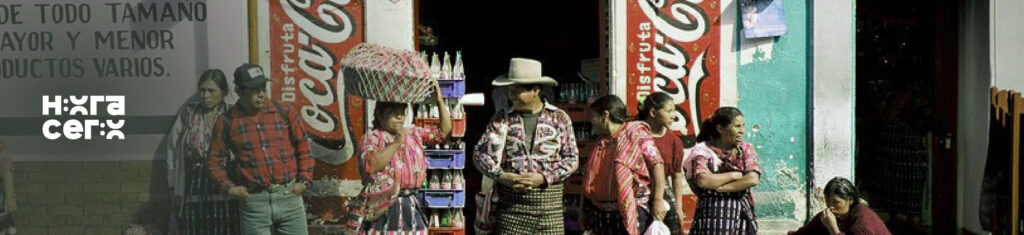
Through this dialogue, which also serves as a record of the memories of women in the Central American diaspora, both women fill a void that was difficult for them to fill when they were children. The professors affirm that during the war in Central America, they searched extensively for information about their country, the country of their parents, but there was nothing; they didn’t know what was happening, and if they managed to obtain information, there was no data to explain it.
They don’t want this to keep happening to future generations, and for that very reason, they had to fight to publish their book, “We had to justify quite a bit why it is necessary to listen to the voices of Central American women,” adds Karina, who, with great satisfaction, recalls the path that she and Ester have traced to tell the story of the Central American diaspora in the United States and fill the absence they encountered when they were little.
Claudia Portillo is a Salvadoran-American co-founder Central American Historical and Ancestral Society (CAHAAS), where, little by little, through research, she constructs the history of Central Americans in California. She began with her own family, originally from El Salvador, who arrived in the United States during the 1960s, supported by other relatives who had come to the country much earlier, exiled from the dictatorship of Maximiliano Hernández Martínez in El Salvador.
Although she was born in the United States, Claudia never forgot her roots, and 60 years after her father and motherwill migrate to the United States, she explores her family history and her connection to El Salvador through this book, in which her generational experience engages in dialogue with that of other more recent ones, whose parents migrated to the United States in the late 1980s due to the internal war in El Salvador.
In this way, the book explores political, institutional, artistic, cultural, healing, gender, sexuality, historical, and memory themes, and does so through the life experiences of artists, academics, activists, indigenous and Afro-descendant people, providing a diversity and a broad panorama that shows what it means to be a Central American woman in the United States.
Ester E. Hernández believes that in the current context, these types of books are necessary, because they tell other voices and narratives about migrant people in the United States.“Everyone assumes that if you’ve already talked about one migrant, about the experience of one migrant, you’ve already talked about everyone, but we don’t believe that’s the case, and that’s the point of our book.»
For these professors, the struggle to create spaces where their voices can be heard continues. They affirm that the next step is to initiate a conversation with Central American women, both in their countries of origin—Guatemala, Honduras, El Salvador, and Nicaragua—and with those who are part of the diaspora residing in other countries. Both believe this is essential to placing Central America on the map of recent history, from the perspective of the lived experiences of those who carry that territory and its culture within them.
| Cookie | Duración | Descripción |
|---|---|---|
| cookielawinfo-checkbox-analytics | 11 months | This cookie is set by GDPR Cookie Consent plugin. The cookie is used to store the user consent for the cookies in the category "Analytics". |
| cookielawinfo-checkbox-functional | 11 months | The cookie is set by GDPR cookie consent to record the user consent for the cookies in the category "Functional". |
| cookielawinfo-checkbox-necessary | 11 months | This cookie is set by GDPR Cookie Consent plugin. The cookies is used to store the user consent for the cookies in the category "Necessary". |
| cookielawinfo-checkbox-others | 11 months | This cookie is set by GDPR Cookie Consent plugin. The cookie is used to store the user consent for the cookies in the category "Other. |
| cookielawinfo-checkbox-performance | 11 months | This cookie is set by GDPR Cookie Consent plugin. The cookie is used to store the user consent for the cookies in the category "Performance". |
| viewed_cookie_policy | 11 months | The cookie is set by the GDPR Cookie Consent plugin and is used to store whether or not user has consented to the use of cookies. It does not store any personal data. |