

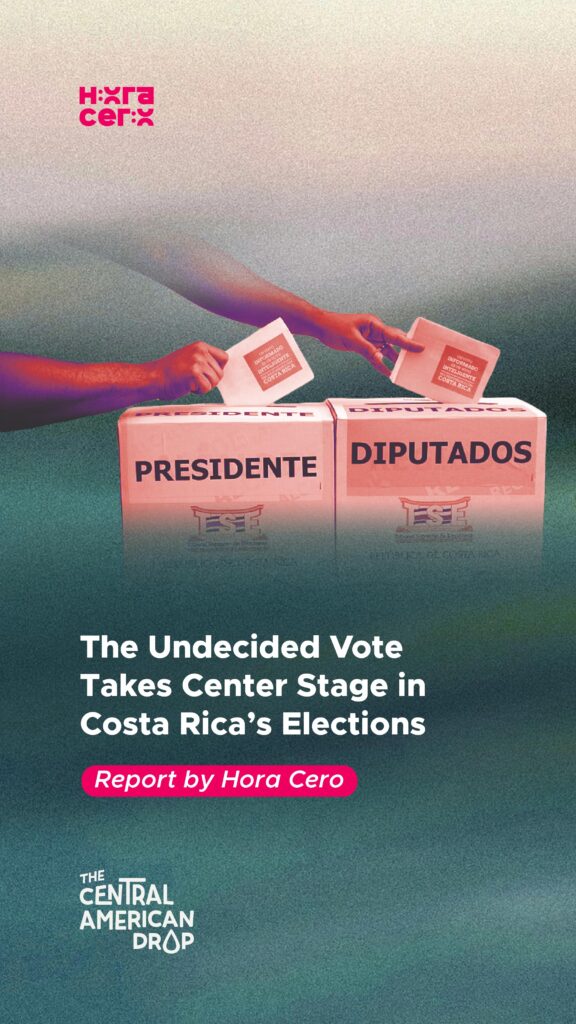
With growing disillusionment, undecided voters emerge as the key force shaping the race.
According to the latest survey by the Center for Research and Political Studies of the University of Costa Rica (CIEP-UCR), one in three people intending to vote in Costa Rica still do not know who they will vote for.
According to the study, 32% of the electorate are undecided. This figure has been gradually decreasing, reaching 45% in December 2025 and 55% in October. Despite the decline, the figure remains high enough to directly influence the election results.
The CIEP study places the ruling party candidate, Laura Fernández, in the lead with 40% of the vote. Undecided voters make up the largest share of the electorate.
69% of undecided people say they will decide their vote in the week before the election, while almost 31% say they will do the same on election day.
Indecision is more common among young women, especially those between 18 and 34 years old.
This weekend, Costa Rica must elect the President of the Republic for the 2026-2030 term and will renew the 57 seats of the Legislative Assembly.
The voting intentions also place the ruling party as the dominant force in the Legislative Assembly. 29% would vote for the Sovereign People’s Party (PPSO), and 46% are still undecided.
The study demonstrates the weak connection of the Costa Rican electorate with political parties and the limited articulation of opposition options that respond to the ruling party.

| Cookie | Duración | Descripción |
|---|---|---|
| cookielawinfo-checkbox-analytics | 11 months | This cookie is set by GDPR Cookie Consent plugin. The cookie is used to store the user consent for the cookies in the category "Analytics". |
| cookielawinfo-checkbox-functional | 11 months | The cookie is set by GDPR cookie consent to record the user consent for the cookies in the category "Functional". |
| cookielawinfo-checkbox-necessary | 11 months | This cookie is set by GDPR Cookie Consent plugin. The cookies is used to store the user consent for the cookies in the category "Necessary". |
| cookielawinfo-checkbox-others | 11 months | This cookie is set by GDPR Cookie Consent plugin. The cookie is used to store the user consent for the cookies in the category "Other. |
| cookielawinfo-checkbox-performance | 11 months | This cookie is set by GDPR Cookie Consent plugin. The cookie is used to store the user consent for the cookies in the category "Performance". |
| viewed_cookie_policy | 11 months | The cookie is set by the GDPR Cookie Consent plugin and is used to store whether or not user has consented to the use of cookies. It does not store any personal data. |