

The immediate trigger of the protests was a reform to the social security system proposed by the government. Facing a growing deficit, the administration announced changes that increased worker and employer contributions while reducing pensions. The reforms echoed longstanding recommendations from the International Monetary Fund, which had urged structural adjustments to prevent the system’s collapse.
Yet the reform landed in an already tense atmosphere. Days earlier, a fire had devastated thousands of hectares in the Indio Maíz Biological Reserve. The government’s slow response angered environmentalists and students, whose protests were met with police repression. When the pension reform was announced, demonstrations spread rapidly across the country, uniting students, retirees, workers, and civil society groups.
The government’s response proved decisive. Police and paramilitary groups violently cracked down on protesters, transforming a social dispute into a political crisis. Images of repression circulated globally, and demands shifted from policy change to calls for Ortega’s resignation. The death toll climbed into the hundreds, thousands were imprisoned, and the reform was eventually withdrawn—but the political rupture remained.
The repression triggered a cascade of international reactions. The United States imposed sanctions through the Office of Foreign Assets Control, targeting officials, state entities, and individuals linked to Vice President Rosario Murillo. The U.S. Congress also passed the Nicaraguan Investment Conditionality Act, requiring opposition to new loans from institutions such as the World Bank and the Inter-American Development Bank, except for humanitarian aid.
Europe followed a similar path. The European Union and the European Parliament imposed asset freezes and travel bans on Nicaraguan officials. These measures sought to pressure the government toward democratic reforms and respect for human rights, but they also accelerated the country’s diplomatic estrangement.
Even within Latin America, Nicaragua began losing traditional allies on the political left. Governments such as that of Gabriel Boric in Chile and Andrés Manuel López Obrador in Mexico distanced themselves from Managua. A revolution that once inspired solidarity across the region was now facing widespread criticism.
Relations with international organizations deteriorated rapidly. Tensions escalated with the Organization of American States after repeated reports documenting human rights violations. In 2021, the government announced its withdrawal; the decision took effect in 2023. Soon after, Nicaragua expelled international missions and restricted cooperation with UN agencies, culminating in its withdrawal from the United Nations Human Rights Council.
This withdrawal marked a turning point: the country was not merely criticized abroad—it was actively disengaging from the institutions designed to monitor and support democratic governance.
The diplomatic rupture has had tangible economic effects. Sanctions, reduced international financing, and diminished cooperation have constrained the government’s room for maneuver. Nicaragua now operates largely outside the region’s traditional political circuits, navigating a narrower set of alliances and resources.
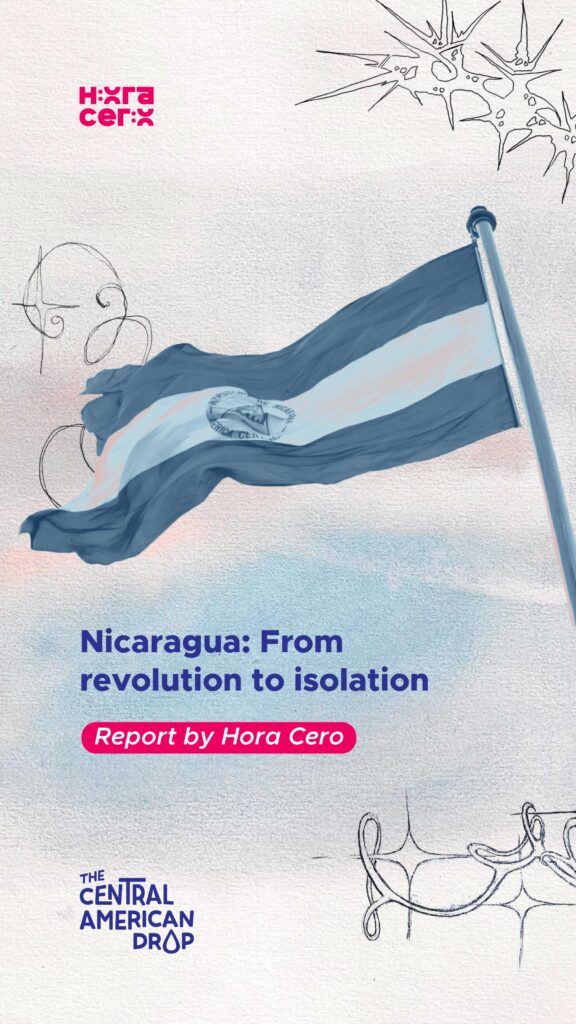
The situation presents a striking historical paradox. Ortega’s government emerged from the Sandinista revolution, a movement that once enjoyed broad international admiration for overthrowing the dictatorship of Anastasio Somoza. Today, that same revolutionary project faces accusations of repression and authoritarianism, and stands increasingly alone on the global stage.
Eight years after the protests of 2018, Nicaragua’s political crisis has evolved into a prolonged diplomatic winter—one that continues to reshape the country’s relationship with the world and redefine its revolutionary legacy.
| Cookie | Duración | Descripción |
|---|---|---|
| cookielawinfo-checkbox-analytics | 11 months | This cookie is set by GDPR Cookie Consent plugin. The cookie is used to store the user consent for the cookies in the category "Analytics". |
| cookielawinfo-checkbox-functional | 11 months | The cookie is set by GDPR cookie consent to record the user consent for the cookies in the category "Functional". |
| cookielawinfo-checkbox-necessary | 11 months | This cookie is set by GDPR Cookie Consent plugin. The cookies is used to store the user consent for the cookies in the category "Necessary". |
| cookielawinfo-checkbox-others | 11 months | This cookie is set by GDPR Cookie Consent plugin. The cookie is used to store the user consent for the cookies in the category "Other. |
| cookielawinfo-checkbox-performance | 11 months | This cookie is set by GDPR Cookie Consent plugin. The cookie is used to store the user consent for the cookies in the category "Performance". |
| viewed_cookie_policy | 11 months | The cookie is set by the GDPR Cookie Consent plugin and is used to store whether or not user has consented to the use of cookies. It does not store any personal data. |